
Finding the best seo tools feels like choosing a new coffee maker: too many options, way too many features, and we just want something that works and does not explode on day two. I get it, we need tools that save time, prove results to clients, and do actual useful work for local businesses. Below I walk through the tools I reach for most, why I pick them, where they fall short, and which one to try first depending on your agency or local setup.
Methodology & how i picked these tools
We tested each tool across three practical axes: accuracy, agency-friendliness, and local features. Accuracy means how close keyword, backlink, and traffic data felt when cross-checked with Google Search Console and real client results. Agency-friendliness means multi-user controls, white-label reporting, and how the tool fits client workflows. Local features covers local rank tracking, citation monitoring, Google Business Profile signals, and how easy it is to manage single-location versus multi-location accounts. Price obviously mattered, because a tool that costs more than the retainer is not helpful.
My process was hands-on: crawls, audits, writing briefs, backlink prospecting, and simulating local client work. I favored tools that do one or two things exceptionally well over those that promise everything but deliver vague dashboards. Some familiar names did not make the short list because their data lagged, integrations were painful, or the once-useful features felt neglected. If a tool made this list, it moved the needle for real projects or saved us time on repeat tasks.
Semrush – best all-in-one seo suite for agencies
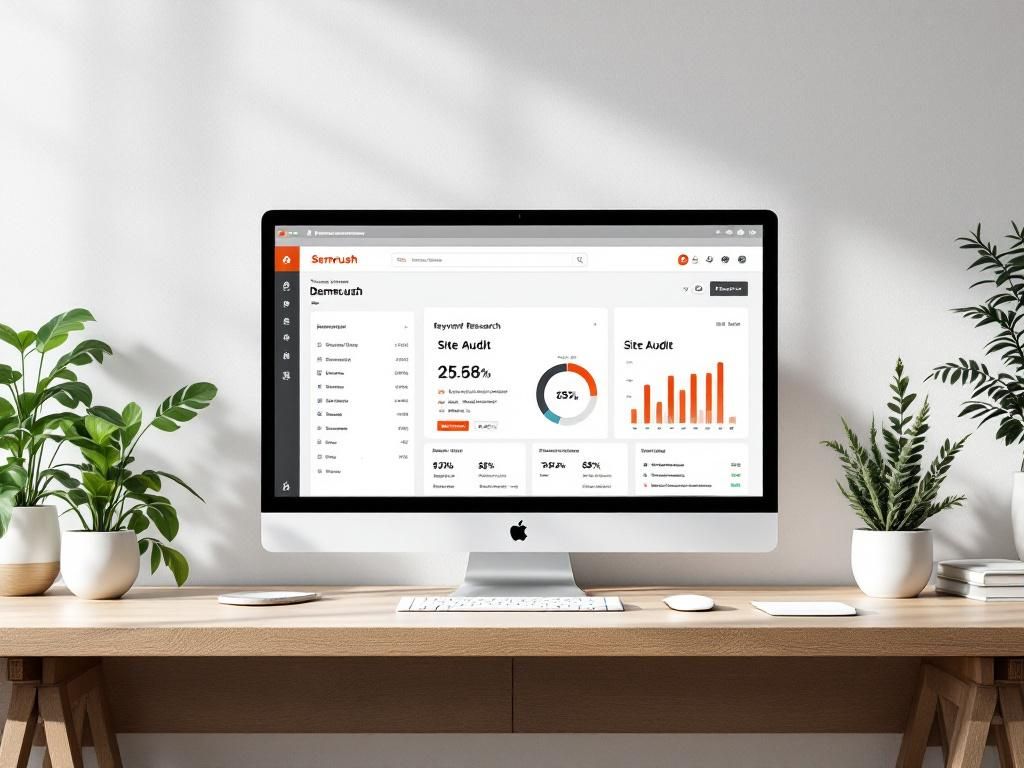
Semrush feels like the Swiss Army knife we pull out when juggling multiple clients. It covers keyword research, site audits, backlink analysis, local listings, and content tools in one place, plus decent social and reporting features. For multi-client agencies that need one dashboard to answer most questions, Semrush usually gets us there without a dozen separate logins (Semrush).
Key features
- Keyword Research: large keyword database, intent tagging, and topic clustering.
- Site Audit: crawl issues, prioritized fixes, and historical tracking.
- Backlink Tools: backlink analytics, toxic link reports, and outreach workflows.
- Local SEO: listings management and local rank tracking.
- Content and Social: SEO Writing Assistant, topic research, and social posting.
- AI Features: brief generation and on-page content suggestions.
Pros / cons
Pros: Broad feature set that reduces tool sprawl, excellent reporting templates for clients, strong local and enterprise capabilities. Cons: Can feel heavy and overwhelming for small local businesses, some modules add extra cost, and interface updates occasionally change workflows mid-project.
Pricing
Semrush offers multiple plans: Pro for freelancers and solo consultants, Guru for growing agencies, and Business for larger operations with advanced features and API access. Agencies often land on the Guru plan or Business plan depending on client volume. Expect to pay more for add-ons like Marketing Calendar or additional projects.
Verdict
Semrush is my pick if you want one platform that covers most bases, especially when managing multiple clients. If you value consolidated reporting and local features, start a trial on a mid-tier plan and scale up as needed.
Ahrefs – best for competitor & backlink research
Ahrefs shines when you want to understand competitors and uncover backlink opportunities. Its site explorer and large link index make finding quality prospects quick, and the keyword tools are accurate enough for strategic planning (Ahrefs).
Key features
- Site Explorer: organic and paid traffic estimates, top pages, and competitor overviews.
- Keywords Explorer: keyword difficulty, click metrics, and parent topic insights.
- Content Explorer: find high-performing content and link targets.
- Backlink Index: historical and current backlink data, broken link discovery.
- Site Audit: technical issues and crawl health.
Pros / cons
Pros: Fast, reliable backlink index, strong competitive intel, and clear link prospecting workflows. Cons: Pricier for agencies that need many projects, fewer white-label reporting features than some competitors, and a steeper learning curve for beginners.
Pricing
Ahrefs has several tiers. Small agencies or serious local businesses often start at the Standard or Advanced plan, agencies needing high-volume crawl and API access should consider the Agency tier. The cost can add up when tracking many domains.
Verdict
Pick Ahrefs when backlinks and competitor analysis matter most. If your strategy is link-driven growth or you run large content operations that need clear competitive benchmarks, Ahrefs pays for itself.
 ## Google search console – essential & free performance data
Google Search Console is non-negotiable. It shows how Google sees your site: which pages are indexed, search queries that drive clicks, and core issues blocking performance. We begin with GSC on every client and have cried once or twice from ignoring it too long (Google Search Console).
Key features
- Performance Reports: impressions, clicks, CTR, and position by query and page.
- Coverage and Indexing: which URLs are indexed or blocked.
- URL Inspection: live checks on specific pages and their last crawl.
- Core Web Vitals: field data and user experience signals.
Pros / cons
Pros: Direct data from Google, essential for diagnosing drops and confirming indexing. Cons: No keyword volume, limited historical export unless paired with other tools, and the UI can be sparse for non-technical clients.
Pricing
Free. Free means you can rely on it without budget concerns, but you should pair it with other tools for volume data and context.
Verdict
GSC is the foundation. Use it daily for troubleshooting, weekly for client reporting, and pair it with an analytics platform for conversion context.
 ## Google analytics 4 (ga4) – user behavior & conversion insights
GA4 is not beloved, but once set up, it gives event-based tracking and conversion paths that let us prove SEO impact. Set it correctly and the data becomes gold for proving value to clients (Google Analytics).
Key features
- Event-Based Tracking: flexible events that map to business goals.
- Audience Building: segmented audiences for remarketing and analysis.
- Conversion Paths: see how organic fits into multi-touch funnels.
- Integration: connects to Search Console and ad platforms.
Pros / cons
Pros: Modern tracking model, better cross-platform measurement than Universal Analytics. Cons: Setup can be confusing, learning curve for building meaningful reports, and some features require advanced configuration or tagging.
Pricing
GA4 is free for most businesses. GA360 is the enterprise option for very large properties that need unsampled reports and higher quotas.
Verdict
All agencies and local businesses that care about conversions should have GA4 in place. If setup is daunting, implement basic event tracking for key conversions, then iterate.
Google keyword planner – free keyword volume & competition checks
Keyword Planner gives quick, Google-sourced volume estimates and competition indicators, useful for budget-conscious local businesses prepping a PPC or basic SEO plan. The interface is clunky, but the data can be a fast sanity check (Keyword Planner).
Key features
- Search Volume Estimates: ranges and trends.
- Competition Estimates: ad competition metric for keywords.
- Keyword Ideas: suggestion lists and keyword grouping.
Pros / cons
Pros: Free and grounded in Google ad data, decent for initial keyword validation. Cons: Granular search volumes can be limited by account activity, and it lacks content-driven insights for organic strategy.
Pricing
Free with a Google Ads account. Data granularity improves with active ad spend.
Verdict
Use Keyword Planner to vet keyword ideas quickly when budgets are tight. For deeper organic keyword planning, pair it with a dedicated SEO tool.
Screaming frog seo spider – best for deep technical audits
Screaming Frog is the desktop crawl tool I open when technical issues look thorny. It finds broken links, duplicate tags, thin content, and lets us custom-extract data. I have run Screaming Frog on nights when a launch was looming and it saved reputation and rankings (Screaming Frog).
Key features
- Crawl Diagnostics: redirects, 4xx/5xx errors, meta and canonical issues.
- Custom Extraction: grab structured data or page-specific values.
- Integrations: connect to Search Console, Google Analytics, and Ahrefs.
- Crawl Configuration: control speed, depth, and user-agent.
Pros / cons
Pros: Unmatched control and detail, great for deep audits and migrations. Cons: Desktop-based, some manual work required to translate findings into fixes, and the UI can feel technical.
Pricing
Free version crawls up to 500 URLs. Paid license unlocks unlimited crawls and advanced features, making it worthwhile for agencies working on medium to large sites.
Verdict
Run Screaming Frog for audits, migrations, and any time you suspect structural issues. Local businesses can use the free version for smaller sites, but agencies will usually need the paid license.
Surfer seo – best for on-page content optimization
Surfer helps write pages that match search intent, with a content editor, SERP analyzer, and briefs that reduce writer stress. It makes on-page improvements measurable, which helps when content teams and clients disagree about what "optimize" means (Surfer).
Key features
- Content Editor: live scoring and suggestions.
- SERP Analyzer: top-page signals and content structure insights.
- Content Audit: find underperforming pages and optimization opportunities.
- Content Planner: topic clusters and keyword groups.
Pros / cons
Pros: Practical recommendations for writers, improves on-page relevance, and has usable briefs. Cons: Can encourage surface-level optimization if followed blindly, and the tool focuses on content signals more than technical ones.
Pricing
Tiers vary by number of documents and words processed. Freelancers and single-site owners can start on lower tiers, agencies producing lots of content should pick plans with higher document allowances.
Verdict
Surfer is great for teams that write regularly and need brief-driven efficiency. Use it to speed up briefs and improve first drafts, but combine with editorial oversight to avoid over-optimization.
Frase – best for fast content briefs & q&a research
Frase is a solid productivity pick when deadlines are tight. It extracts common questions, builds briefs fast, and helps us create content that answers real user queries , handy for local pages and FAQ-driven content. We have saved tight deadlines with Frase more than once (Frase).
Key features
- Content Briefs: auto-generated outlines from top-ranking pages.
- Answer Extraction: snags common questions and on-page answers.
- SERP Analysis: competitor content signals and structure.
- Topic Research: surface-level intent mapping.
Pros / cons
Pros: Quick briefs and writer-friendly exports, speeds up content ops. Cons: Can produce shallow AI outputs without editing, and sometimes misses niche local intent.
Pricing
Plans scale by the number of documents and AI usage. Agencies producing many briefs should pick higher tiers or enterprise options.
Verdict
Frase is a productivity tool for teams that need speed. Use it when you want a consistent baseline brief for writers, then layer in local insight and original research.
Clearscope – best for high-quality content optimization
Clearscope focuses on relevance and content quality. For clients where organic traffic must convert, Clearscope helps shape content that ranks and engages. We saw measurable improvements in time-on-page and ranking moves after applying Clearscope recommendations on long-form guides (Clearscope).
Key features
- Content Scoring: relevance benchmark against top-ranking pages.
- Keyword Recommendations: semantic terms and frequency guidance.
- Editor Integrations: Google Docs and CMS plugins.
- Reporting: shareable content performance metrics.
Pros / cons
Pros: Excellent for content teams chasing high-value organic traffic, integrates well with editorial workflows. Cons: Pricier than simpler tools, and not a technical SEO or backlink tool.
Pricing
Clearscope pricing reflects content-focused value. It becomes cost-effective for teams producing consistent, conversion-weighted content.
Verdict
Invest in Clearscope when top-tier content quality is a business goal and you can measure ROI through leads or revenue. For smaller local pages, cheaper editors may suffice.
Moz pro – best for domain authority & link tracking
Moz Pro is approachable and gives clear authority and backlink metrics clients understand. If you need simple dashboards and explanation-friendly metrics, Moz still fits nicely for agencies explaining progress to non-technical stakeholders (Moz).
Key features
- Keyword Research: suggestions and difficulty scoring.
- Link Explorer: backlink analysis and spam scores.
- Domain Authority: client-friendly authority metric.
- Site Crawl: technical issue identification.
Pros / cons
Pros: Easy to use, educational resources, and clean reporting. Cons: Link index size trails Ahrefs and Semrush, which sometimes shows fewer links on newer domains.
Pricing
Multiple tiers for freelancers and agencies. Moz Pro is often a mid-priced option that balances usability and features.
Verdict
Choose Moz if you value simple reporting and client-friendly metrics. It is especially helpful for teams that need to explain backlink health without deep technical detail.
Se ranking – best value for rank tracking & local seo
SE Ranking packs accurate rank tracking, white-label reporting, and local features at a price that makes sense when managing many small clients. It is a go-to when we need scale without massive cost (SE Ranking).
Key features
- Rank Tracking: daily updates for local and global positions.
- On-Page Audit: on-page recommendations and checks.
- Competitor Research: basic competitor insights and keyword overlaps.
- White-Label Reports: customizable branding for client decks.
Pros / cons
Pros: Affordable, scales well for local campaigns, and has useful white-label options. Cons: Data depth is not as rich as top-tier tools for advanced link or content research.
Pricing
Plans scale by number of tracked keywords and frequency of updates. Small agencies or businesses with many locations will find the pricing attractive.
Verdict
Use SE Ranking for high-volume, low-cost rank tracking and reporting. It is a practical pick for agencies managing lots of single-location businesses.
Yoast seo – best wordpress plugin for on-page seo
If the site runs WordPress, Yoast is the plugin many clients already know. It keeps titles, meta, and basic structured data on track and gives editors friendly feedback. We all breathe a little easier after updating that SEO title on a client page (Yoast).
Key features
- Meta Management: titles, descriptions, and canonical hints.
- Readability Checks: simple readability and SEO indicators in the editor.
- Schema Basics: structured data for key page types.
- XML Sitemaps: auto-generated sitemaps and index control.
Pros / cons
Pros: Super easy for clients to use, integrates with Gutenberg, and helps avoid common on-page mistakes. Cons: Limited advanced features compared with a full platform, and the scoring can be gamed if used without strategy.
Pricing
Free plugin with a premium version that adds redirects, multiple keyphrase checks, and support.
Verdict
Yoast is an easy win for WordPress sites to enforce basic on-page best practices. Pair it with a content tool like Surfer if you want deeper optimization.
Answerthepublic – best for question-based topic research
AnswerThePublic surfaces the questions people ask, which is invaluable for local FAQs and content ideas that connect to real intent. It is a fast way to build topic lists that feel human and useful (AnswerThePublic).
Key features
- Question Visualization: grouped questions and prepositions.
- Topic Clustering: quick clusters to base briefs on.
- Downloads: exportable lists for briefs.
Pros / cons
Pros: Inspires real, human-led content and local FAQ pages. Cons: Data can be noisy and needs filtering for relevance; not a keyword volume tool.
Pricing
Free limited usage and paid plans for heavier research.
Verdict
Use AnswerThePublic when you need real-world question ideas fast. Great for local landing pages and FAQ sections.
Similarweb – best for market & competitor traffic insights
SimilarWeb gives high-level traffic trends and referral sources that help shape pitch decks and strategy sessions. It is especially useful when you need a quick benchmark for a prospect or competitive market understanding (SimilarWeb).
Key features
- Traffic Estimates: audience size and trends.
- Referral Sources: where competitors get referrals from.
- Audience Interests: topical affinities and demographics.
- Benchmarking: compare multiple sites side by side.
Pros / cons
Pros: Strong market-level insights for strategy and pitches. Cons: Not as accurate at granular keyword levels or for small local sites.
Pricing
Enterprise-focused pricing for full features. Smaller plans exist but may limit depth.
Verdict
Use SimilarWeb for market sizing and competitor overviews. It is a pitch and strategy tool more than a daily SEO workhorse.
Keywords everywhere – best lightweight keyword metrics extension
Keywords Everywhere is a browser extension that shows search volume, CPC, and competition inline while you browse. It is perfect for quick checks and saves small amounts of time that add up across audits (Keywords Everywhere).
Key features
- Inline Metrics: volume and CPC overlays in search.
- In-Page Overlays: keyword data on pages.
- Exportable Lists: quick keyword exports.
Pros / cons
Pros: Super convenient, cheap, and removes friction during audits. Cons: Not a replacement for full keyword research platforms.
Pricing
Credit-based pricing for lookups. Very affordable for occasional use.
Verdict
Install Keywords Everywhere if you like instant context while looking at pages. It is a small productivity win.
Pagespeed insights / lighthouse – best for speed & ux diagnostics
PageSpeed Insights and Lighthouse give clear explanations of what is slowing your site and prioritize fixes in terms that developers can action. Speed matters for rankings and keeping users, and these tools provide the starting point to actually improve load and core web vitals (PageSpeed Insights).
Key features
- Performance Scores: lab and field data.
- Core Web Vitals: LCP, FID, CLS diagnostics.
- Prioritized Fixes: actionable recommendations and code snippets.
- Lighthouse Reports: in-depth audits for accessibility and SEO.
Pros / cons
Pros: Free and actionable, great for developer conversations. Cons: Some fixes are technical and require dev time, and lab data sometimes differs from real user metrics.
Pricing
Free. Developer implementation may have a cost.
Verdict
Use PageSpeed Insights regularly during optimization sprints. For local businesses, improving speed often lifts conversions more than marginal ranking changes.
Comparison table: quick at-a-glance picks
Below is a compact comparison so you can skip to the trial that matters.
| Tool | Best Use Case | Pricing Tier (start) | Pros | Ideal User |
|---|---|---|---|---|
| Semrush (Semrush) | All-in-one agency platform | Mid-tier | Comprehensive features, strong reporting | Agencies managing multiple clients |
| Ahrefs (Ahrefs) | Backlink & competitor research | Mid-high | Large link index, reliable intel | Link-focused strategies |
| Google Search Console (GSC) | Indexing & query data | Free | Direct Google data | All sites |
| GA4 (GA4) | Conversion & behavior | Free / Enterprise | Event-based insights | Sites focusing on conversions |
| Keyword Planner (Planner) | Free volume checks | Free | Google-sourced estimates | Local businesses on a budget |
| Screaming Frog (Screaming Frog) | Technical audits | Free / Paid | Deep crawl control | Migrations and audits |
| Surfer (Surfer) | On-page optimization | Mid | Writer-friendly briefs | Content teams |
| Frase (Frase) | Fast briefs | Mid | Quick Q&A extraction | Small teams with tight deadlines |
| Clearscope (Clearscope) | Content quality | Higher | Strong content scoring | Enterprise content teams |
| Moz Pro (Moz) | Authority tracking | Mid | Easy dashboards | Client-facing SEO reporting |
| SE Ranking (SE Ranking) | Value rank tracking | Low-mid | Affordable local tracking | Agencies with many local clients |
| Yoast (Yoast) | WordPress on-page | Free / Premium | Editor-friendly | WordPress sites |
| AnswerThePublic (ATP) | Question research | Free / Paid | Idea generation | Local content ideation |
| SimilarWeb (SimilarWeb) | Market insights | Enterprise | High-level benchmarking | Pitch and strategy stages |
| Keywords Everywhere (Keywords Everywhere) | Quick keyword checks | Low | Instant context | Fast audits |
| PageSpeed Insights (PSI) | Speed diagnostics | Free | Actionable fixes | Everyone |
What the table includes
The table gives a one-line elevator pitch, starting pricing direction, quick strengths, and the user type who benefits most. Use this to decide which trial to start today.
How to choose the best seo tools for your agency or local business
Pick tools based on your team size, client mix, and whether you need depth or scale. For single-location local businesses, prioritize local rank tracking, content briefs, and PageSpeed checks. For agencies, pick a heavy-hitter for reporting and a specialist tool for link or content work.
Start by mapping needs: do you need attribution and conversions? Start with GA4 and GSC. Need content that converts? Add Surfer or Clearscope. Need link outreach and competitive intel? Add Ahrefs. Want affordable, repeatable rank reporting for many clients? SE Ranking fits.
Combine tools smartly to avoid overlap. For example, Semrush or Ahrefs plus Screaming Frog plus Surfer covers audit, backlink research, and content. Add GSC and GA4 for authoritative data.
Quick decision checklist
- Budget under $100/month: start with Keywords Everywhere, Keyword Planner, GSC, and PageSpeed Insights.
- Managing 5+ local clients: trial SE Ranking for tracking and white-label reports.
- Content-first strategy with conversions: try Surfer or Clearscope plus GA4.
- Link-building focus: trial Ahrefs and Screaming Frog.
- Single platform convenience: evaluate Semrush Guru.
Bundles & integrations to look for
Look for tools that integrate with Google Search Console and GA4, and that export CSVs for your reporting system. White-label reporting and API access are worth the extra cost if you scale. Semrush, Ahrefs, and SE Ranking have reporting options; Surfer and Clearscope integrate with editors. Screaming Frog connects to Search Console and Ahrefs for richer audits.
Faqs , quick answers to common tool questions
Q: Do I need paid tools to rank?
A: No, but paid tools speed decision-making and uncover opportunities you might miss. Start with GSC and GA4, then add a paid tool for scale.
Q: Can AI content tools replace SEO editors?
A: Not really. AI can draft briefs or first drafts, but human strategy and editing remain essential for topical authority and local nuance.
Q: What if I choose the wrong tool mid-contract?
A: Most tools offer trials and monthly billing. Switch after a trial and document the migration steps for continuity.
Q: How do I measure local SEO success?
A: Track local rankings, organic traffic, GSC clicks for local pages, GMB performance, and conversions tied to local landing pages.
Q: Are free tools worth using for agencies?
A: Yes. GSC, GA4, and PSI are indispensable. Free tools pair well with paid ones to reduce cost.
Final encouragement
Choosing the best seo tools does not have to be a stressful commitment. Start small, pick one tool that solves your biggest pain point, and measure real outcomes for a month. We will iterate and switch when something does not work. Trust me, the right toolset will save hours and make client wins repeatable. We got this.
Leave a Reply